How to Choose the Right Freight Carriers for Your Business Needs?
Choosing the right freight carriers is crucial for business success. The logistics landscape is complex and ever-changing. Many businesses struggle to find suitable freight carriers that meet their needs.
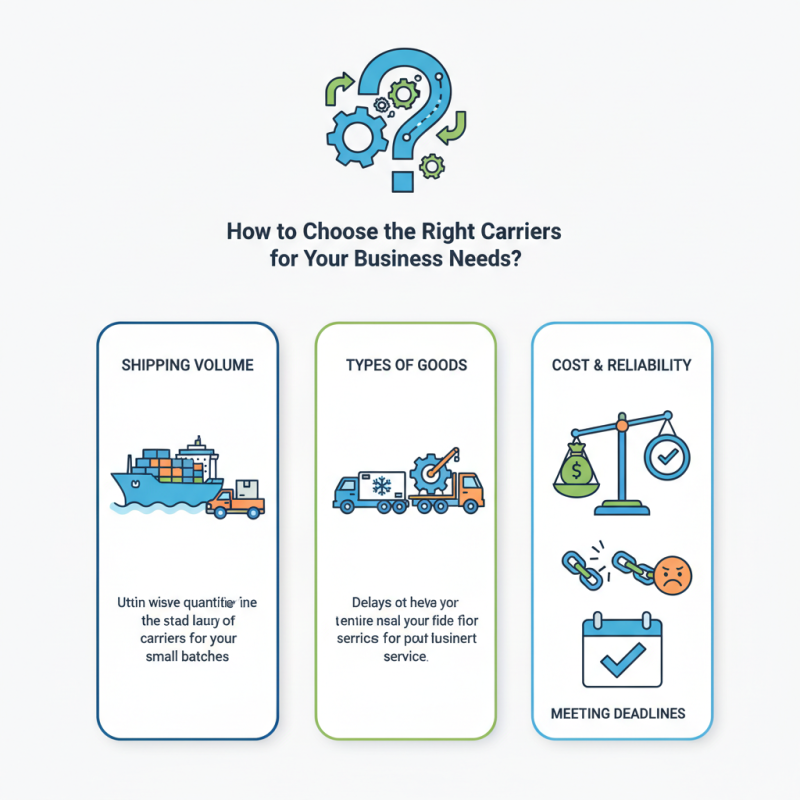
Consider your shipping volume. Are you shipping large quantities regularly or small batches occasionally? This will influence your choice. Additionally, think about the types of goods you transport. Different carriers specialize in various types of cargo. Some may handle perishables, while others focus on machinery.
Moreover, cost is a significant factor. While cheaper options might seem attractive, they can lead to delays and poor service. It’s essential to balance cost with reliability. Frequent delays can frustrate customers and harm your reputation. Reflect on your current challenges. Are your deadlines consistently met? If not, it may be time to reassess your freight carriers.
Understanding Your Business Freight Needs
When selecting freight carriers, understanding your business needs is essential. Start by assessing the volume and frequency of shipments. Are you shipping daily or weekly? The answer affects the capacity you require. Take inventory of your products too. Are they perishable or fragile? Certain carriers specialize in specific goods. Knowing this can save time and money.
Tips: Evaluate your transportation budget. This step can help prioritize the best options. Seek carriers with transparent pricing. Hidden fees can derail your budget.
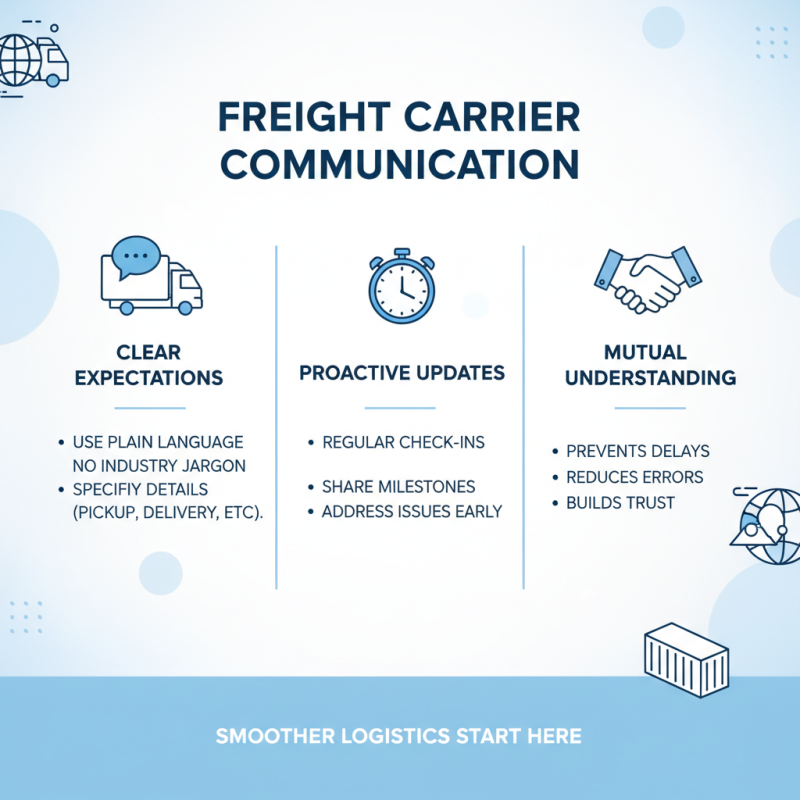
Consider the geographic area of your business. If you operate regionally, a local carrier might serve you better. However, if you ship globally, look for carriers with international networks. Communication is key. Establish how often and effectively you'll exchange information with your carrier. Trust and reliability matter in freight management.
Tips: Utilize online resources for freight carrier comparisons. Gathering feedback can provide insights into carrier reliability. Ask for references when necessary. Reflect on past shipments. Were there delays or issues? Do they guide your choices today?
How to Choose the Right Freight Carriers for Your Business Needs
| Carrier Type |
Service Offered |
Delivery Speed |
Cost Estimate |
Geographic Coverage |
| LTL (Less Than Truckload) |
Shared truck space for multiple shipments |
3-7 days |
$$ |
National |
| FTL (Full Truckload) |
Dedicated truck for a single shipment |
2-5 days |
$$$ |
National/International |
| Air Freight |
Fast air transportation of goods |
1-3 days |
$$$$ |
Global |
| Ocean Freight |
Shipping via cargo ships |
10-30 days |
$ |
Global |
| Intermodal |
Combination of train and truck transport |
5-14 days |
$$ |
National |
Evaluating Different Types of Freight Carriers
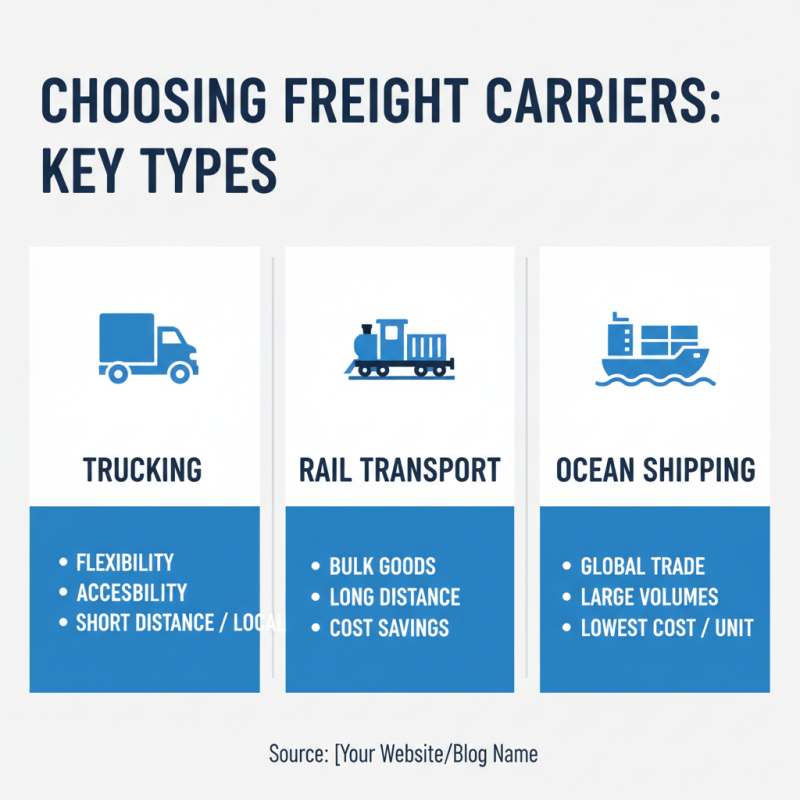
Choosing the right freight carriers is crucial for any business. Various types exist, each with unique strengths. Trucking, for instance, provides flexibility and accessibility. It's great for short distances and local deliveries. Rail transport excels in moving bulk goods over long distances, offering cost savings. However, it may lack speed.
Air freight is ideal for urgent shipments but comes with a higher price tag. Ocean freight is suitable for international shipping, especially for large volumes. Yet, it takes longer. Selecting the appropriate type depends on your specific needs.
Tip: Assess your shipment volume and frequency. This will help determine the most cost-effective solution. Also, consider transit time. It often influences customer satisfaction.
Review the reliability of potential carriers. Research their track record for on-time deliveries. Unreliable carriers can harm your business reputation. Reflect on the carrier’s capacity to handle your specific goods. Some may not suit your product type.
Assessing Carrier Reliability and Reputation
Assessing carrier reliability and reputation is critical for businesses that rely on freight services. According to a study by the Freight Transportation Research Institute, 70% of logistics managers rank reliability as the top factor when choosing a carrier. Delays and damage can cost companies significantly. Every percentage increase in delivery reliability can lead to a 1% rise in customer satisfaction, affecting overall sales.
When evaluating carriers, metrics such as on-time delivery rates and claims history should be scrutinized. A report by the National Freight Transportation Association reveals that only 60% of carriers meet minimal service expectations. In this context, businesses must dig deep into customer reviews and industry ratings. Sometimes, the best reviews may come from smaller, regional carriers who prioritize service.
However, it’s important to recognize that reputation is not static. Carriers can change their service quality over time. Businesses should regularly reassess the reliability of their chosen freight partners. If performance issues arise, it may be a sign to explore alternatives. This reflection can lead to better choices in the long run.
Freight Carrier Reliability Assessment
This bar chart illustrates the reliability scores of various freight carriers based on assessments of factors such as on-time delivery, service quality, and cargo safety. Selecting the right carrier is crucial for business efficiency.
Comparing Costs and Services Offered
Choosing the right freight carrier can significantly impact your business operations. Cost is a critical factor. According to a 2022 industry report, freight costs account for about 10% of a company's revenue. Many carriers offer various pricing structures. Some provide a flat rate, while others charge based on weight or distance. Understand these differences. Evaluate how each pricing method aligns with your business model.
Services offered by freight carriers matter, too. Certain carriers specialize in specific modes like rail or air. Others may offer integrated shipping solutions. A recent survey found that 70% of businesses prefer carriers that provide tracking and logistics support. These features enhance transparency and efficiency. Consider what services would make your shipping process smoother.
While price and services are crucial, hidden fees can be troublesome. Always read the fine print. Over 25% of businesses reported unexpected surcharges in their contracts. This can erode the perceived savings from cheaper rates. Assess each carrier's transparent practices. Ensure you understand all potential costs to avoid unpleasant surprises.