How to Get an LTL Quote from China?
Getting an accurate ltl quote from China starts with a clear picture of the shipment and its route. For many importers, “LTL” describes the inland truck leg after ocean freight, not the full journey. Confirming that distinction early can prevent a quote from comparing different services.
The scale of trucking helps explain why shipment details matter. The American Trucking Associations’ 2024 American Trucking Trends report says U.S. trucks moved 11.18 billion tons of freight in 2023. Yet a small shipment does not always mean a simple price. A few extra inches, a non-stackable pallet, or a residential delivery can change handling needs and cost. Details matter.
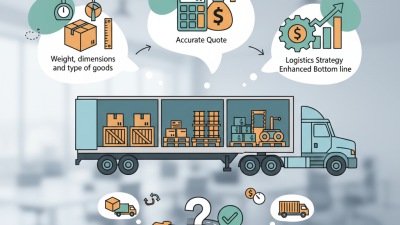
To request a useful quote, prepare the pickup and delivery locations, number of pallets, dimensions, gross weight, commodity description, and requested service. Include whether the cargo is ready for pickup and whether the destination has a loading dock or forklift. The World Bank’s 2023 Logistics Performance Index assesses 139 economies, highlighting how customs, infrastructure, and shipment timeliness shape international logistics. It offers valuable context, but it cannot predict the price of one shipment.
Ask whether the quote covers pickup in China, export handling, ocean transport, destination charges, customs brokerage, and final-mile delivery. Request a breakdown, the quote’s validity period, and any accessorial charges that could apply. Compare like with like. A low number may omit an important leg.
And check the measurements twice. The first estimate may still be wrong if the cargo changes or the route is incomplete. A careful quote is not a guarantee; it is a clearer starting point.

Define China-Origin LTL and Confirm It Fits a Shared-Truck Shipment
China-origin LTL means less-than-truckload freight collected in China and moved with other shippers’ cargo in the same truck. Each shipment uses part of the trailer, and the rate usually reflects its weight, dimensions, route, and handling needs. It can suit several pallets or cartons that do not justify a dedicated vehicle. Measure every pallet.
The term describes a road-freight leg, not automatically the entire international journey. Cargo may travel by shared truck to a warehouse or port, then continue by another transport mode. That distinction matters when requesting a quote: ask which leg the price covers and where responsibility transfers. For a China-origin LTL estimate, provide pickup and delivery postcodes, ready date, piece count, exact dimensions, gross weight, and whether freight can be stacked. Add details such as loading access or appointment requirements. A rough carton count is not enough.
Compare the quote with a dedicated-truck option if the shipment is large, time-sensitive, or needs fewer handling transfers. Consolidated freight can involve extra stops, so transit estimates may vary. I would treat an early price as provisional until the cargo is measured and the route confirmed; estimates do sometimes miss awkward pallet sizes.
Gather the Route, Cargo Description, Dimensions, Weight, and Incoterms
How to Get an LTL Quote from China?
A dependable less-than-truckload quote starts with a precise route. Give the pickup city, delivery city, and exact address or terminal details. State whether the shipment needs door-to-door service or terminal handling. Add a clear cargo description, such as “two wooden crates of machine parts,” rather than “general goods.” Small details matter.
Provide each piece’s length, width, and height, plus total gross weight. Include the number of pallets or crates and note whether freight can be stacked. These details help carriers assess space, handling, and possible accessorial charges. The Council of Supply Chain Management Professionals’ 2024 State of Logistics report estimated U.S. logistics costs at $2.3 trillion, or 8.7% of GDP, in 2023. That figure is not a China LTL rate, but it shows why small shipment details can matter in a costly supply chain.
Tips: State the Incoterms rule and named place, such as “FCA, Shanghai,” and identify the Incoterms edition. Incoterms clarify who arranges transport and pays specific costs; they do not replace shipment dimensions or a full delivery address. No guesswork helps. If a measurement is estimated, label it clearly and confirm it before booking. One imperfect habit worth correcting: sending only total weight often seems quicker, but it can lead to a quote that needs revision.
How to Get an LTL Quote from China
Gather the route, cargo description, dimensions, gross weight, and Incoterms before requesting a quote.
Example Cargo Dimensions
Illustrative shipment: one pallet of packaged machine parts, 120 × 100 × 140 cm, gross weight 350 kg. Example route: Shenzhen, China, to Hong Kong. State the named pickup or delivery place and agreed Incoterms (for example, EXW Shenzhen) in your request. Dimensions and weight are sample figures, not a carrier quote.
Calculate CBM and Confirm the Carrier’s Density and Chargeable-Weight Rules
To get a useful LTL quote from China, send the carrier each pallet’s length, width, and height, including packaging and any overhang. Convert measurements to meters, then multiply them to get CBM. A pallet measuring 1.2 × 1.0 × 1.1 meters occupies 1.32 CBM. Weigh the packed shipment, not the goods before packing. Small errors matter.
Calculate density by dividing gross kilograms by total CBM. Then ask how the carrier converts volume or density into chargeable weight. Some use a volumetric divisor; others apply minimum density, rounding, or pallet-level rules. These terms can differ by route and service. The National Motor Freight Traffic Association’s freight-class guidance treats density as one classification factor, not the only one. Do not assume its US framework automatically applies to a China-origin service.
Tips: Request the carrier’s divisor, rounding method, and minimum chargeable weight in writing. Send photos and final packed dimensions if available. The CSCMP’s 2024 State of Logistics Report estimated US logistics costs at 8.7% of GDP in 2023; it is not a China rate guide, but it shows why quote inputs deserve care. I would still recheck dimensions after wrapping. That step is easy to miss.
How to Get an LTL Quote from China? - Calculate CBM and Confirm the Carrier’s Density and Chargeable-Weight Rules
| Shipment |
Handling Units |
Dimensions per Unit (cm) |
Total Volume (CBM) |
Gross Weight (kg) |
Density (kg/CBM) |
Volume Weight at 250 kg/CBM (kg) |
Illustrative Chargeable Weight (kg) |
| A |
8 cartons |
60 × 40 × 35 |
0.672 |
180 |
267.86 |
168 |
180 |
| B |
2 pallets |
120 × 100 × 110 |
2.640 |
420 |
159.09 |
660 |
660 |
| C |
12 cartons |
50 × 40 × 30 |
0.720 |
90 |
125.00 |
180 |
180 |
| D |
1 crate |
100 × 80 × 70 |
0.560 |
140 |
250.00 |
140 |
140 |
| E |
3 pallets |
120 × 80 × 150 |
4.320 |
900 |
208.33 |
1,080 |
1,080 |
| Total |
8.912 |
1,730 |
194.12 overall |
2,228 |
2,228 |
Calculation and quotation assumptions:
CBM = length × width × height in centimeters ÷ 1,000,000 × number of units.
Density = gross weight ÷ total CBM. For this example only, volume weight is calculated at 250 kg per CBM, and chargeable weight is the greater of gross weight or volume weight for each shipment line. These are illustrative figures, not a universal carrier rule.
Confirm these rules with the carrier before requesting a final quote
| Rule to Confirm |
Information to Request |
| Density or volume-weight divisor |
Ask which divisor or density-based rating method applies to the origin, destination, service, and cargo type. |
| Chargeable-weight calculation |
Confirm whether actual and volume weight are compared per handling unit or across the whole shipment, and how the result is rounded. |
| Minimums and pallet rules |
Check for minimum chargeable weight, minimum shipment charge, pallet-space rules, height limits, and non-stackable freight surcharges. |
| Measurement and weighing |
Confirm whether dimensions are measured after packing and palletizing, and whether the carrier reweighs or remeasures cargo at the warehouse. |
| Quote scope |
Ask which origin, destination, documentation, handling, customs, and delivery charges are included or excluded from the quoted price. |
Compare Pickup, Export, Line-Haul, Customs, Delivery, and Accessorial Fees
An LTL quote from China is only useful when its assumptions are clear. Share the pickup city, destination postal code, cargo-ready date, pallet count, dimensions, and gross weight. Carton count alone is not enough; a tall pallet may take more space than its weight suggests. Details matter.
Compare pickup, export handling, and line-haul as separate charges. Ask whether pickup includes loading at the supplier’s site, and whether export fees cover documentation and terminal handling. Line-haul pricing may depend on the route, shipment volume, and service level. Request the currency and quote validity period. Estimates can change.
Check whether customs clearance, duties, and taxes are included or billed separately. These are not the same as freight charges. At delivery, confirm the receiving hours and whether an appointment, liftgate, or residential service is needed. Such accessorial fees can appear when the site details are missing. A quote can still miss one awkward detail: a warehouse may have a narrow delivery window. I would verify that before booking.
Check Market Context: China’s Social Logistics Volume Grew 5.2% in 2023 (CFLP)
How to Get an LTL Quote from China?
China’s social logistics volume grew 5.2% in 2023, according to the China Federation of Logistics and Purchasing (CFLP). This figure reflects broad logistics activity across the country. It offers useful market context, but it does not guarantee lower LTL prices or available space on a particular route. The number matters. LTL costs depend on shipment details, lane conditions, and pickup timing. A busy market can still have uneven capacity between cities.
To request a practical quote, provide the pickup and delivery locations, ready date, total weight, and dimensions of every pallet or crate. Include the number of pieces and say whether items can be stacked. For example, a 300-kilogram shipment measuring 1.2 by 1 by 1.4 meters may be rated differently from a smaller, dense load. Ask which services are included, such as collection, handling, and final delivery. Missing dimensions can lead to a revised price later. That is easy to overlook.
Tips: Send clear photos and accurate measurements, then ask how long the quote remains valid. Confirm whether fuel or other handling charges are listed separately. Compare quotes using the same pickup and delivery requirements. If your cargo details are estimates, say so; a neat-looking quote is not always a reliable one.