
Buying a Personal Scooter for international use requires more than comparing prices and advertised range. Buyers must examine safety features, battery quality, charging compatibility, rider weight limits, and local road conditions. A scooter that performs well on smooth European streets may struggle on uneven pavements or steep Asian hills. Small details matter. Tire width matters.
This guide offers practical advice drawn from product research, rider experience, and common after-sales concerns. It explains how to assess motor power, braking systems, folding mechanisms, weather protection, and replacement-part availability. Buyers should also confirm shipping restrictions, warranty coverage, and approved electrical standards before paying. These checks can prevent expensive surprises.
A specification sheet is not a test ride. Claimed range often changes with rider weight, temperature, hills, and riding speed. I have seen attractive deals become poor choices when batteries were difficult to replace or service centers were unavailable. That possibility deserves attention. Not every popular model suits every market.
Reliable buying decisions combine manufacturer documentation, independent reviews, dealer communication, and realistic daily needs. Consider the route to work, storage space, charging location, and expected maintenance. A lightweight model may be convenient, yet a stronger frame can provide greater stability. There is always a trade-off.
The following ten tips will help global buyers compare Personal Scooter options carefully, identify misleading promises, and choose equipment that fits their environment, budget, and responsible riding habits.
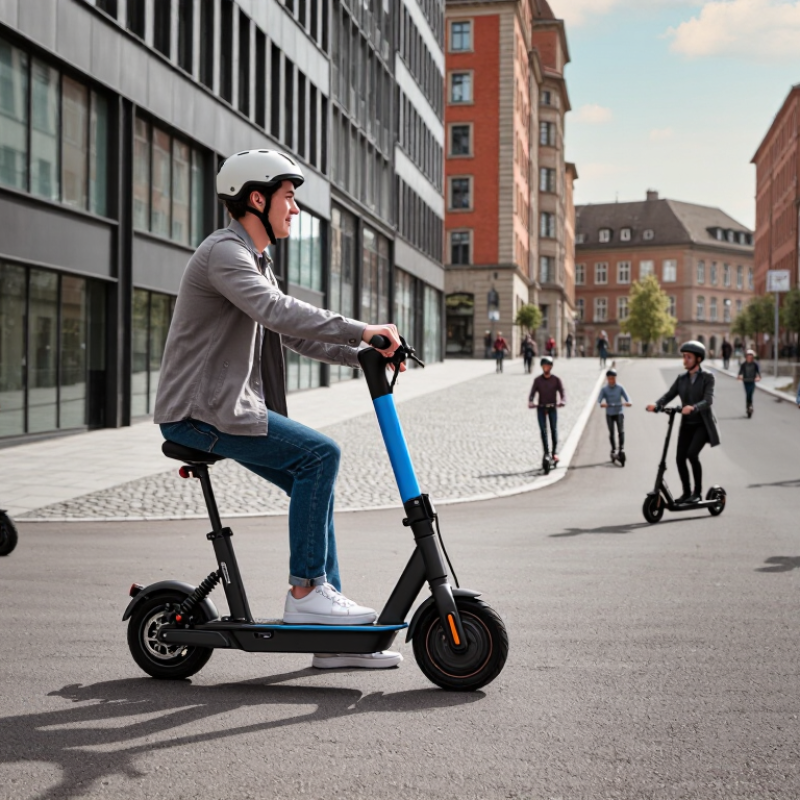
10 Personal Scooter Buying Tips for Global Buyers
Define your riding needs before comparing motors, batteries, or folding systems. A scooter for short city errands differs greatly from one used for daily commuting. Record your usual distance, including the return trip and a small battery reserve. A short test ride can reveal more than an impressive specification sheet. I once underestimated how tiring repeated stops felt on a stiff deck. Comfort matters.
Study your route closely. Note steep streets, rough pavement, narrow lanes, rain exposure, and elevator access. Larger wheels can improve stability on uneven surfaces, while compact wheels may suit smooth indoor routes. Ask whether the stated range reflects your weight, temperature, speed, and hills. It often does not. Measure twice. Check the scooter’s maximum load, braking response, handlebar height, and standing area against your body. Riders carrying groceries should examine balance, not just payload numbers. A heavier frame may feel safer, but it can become inconvenient on stairs or public transport. Consider charging space, outlet access, and storage security at home. Review current local requirements for speed, lighting, protective equipment, and where scooters may be used. Specifications are useful, but real terrain decides performance. If possible, rent or borrow a similar model for several days. Your first preference may change after a wet commute, a crowded sidewalk, or a long uphill ride.

Choosing a personal scooter starts with your route, not its appearance. A lightweight commuter model suits trains, elevators, and smooth city streets. A seated model offers better comfort for longer trips. Dual-suspension scooters handle broken pavement, but they usually weigh more. My first mistake was trusting the advertised range. Real traffic, hills, wind, rider weight, and cold weather reduce it. Leave a 20–30% buffer for daily use.
Motor power needs careful reading. Check continuous or nominal power, not only peak output. A 350-watt motor may manage flat roads, while heavier riders or steep streets may need 500 watts or more. Local rules can limit speed or motor ratings, so verify requirements before buying.
Battery capacity, measured in watt-hours, gives a better comparison than range alone. Divide watt-hours by typical energy use, then reduce the result for real conditions. Weight matters every day. A 15-kilogram scooter feels manageable on stairs; a 25-kilogram model can become exhausting. Underpowered scooters are frustrating. Overbuilt scooters are inconvenient. I still think buyers often choose too much performance and too little portability. Check tire size, water resistance, brake quality, charging time, and replacement-part access before paying.
Safety should lead the buying decision, not advertised speed. The U.S. Consumer Product Safety Commission reported 233 micromobility deaths from 2017 to 2022. It also estimated about 360,800 related injuries during that period. Check for two independent braking methods, bright front and rear lights, reflectors, a reliable bell, and a secure stem lock. Confirm the battery and electrical system meet recognized safety standards, such as UL 2271 and UL 2272, where applicable. Certification rules differ by country.
Build quality appears in small details. Inspect welds, folding joints, cable routing, deck stiffness, tire condition, and bearing movement. A scooter can feel solid in a showroom but loosen after repeated vibration. Check the stated maximum load against your body weight, clothing, and luggage. Leave a margin.
I still tend to overvalue range figures, although cold weather, hills, and heavier loads reduce real performance. A practical test ride reveals more than a specification sheet.
Weather resistance needs careful reading. An IP rating follows IEC 60529, but it does not mean the scooter is waterproof. IP54 may protect against limited dust and water splashes, while submerged riding remains unsafe. Look for sealed charging ports, corrosion-resistant fasteners, and protected connectors. Ride through shallow wet streets only when local guidance permits. Dry the scooter before charging. Small gaps around the deck can become expensive problems.
Before buying a personal scooter abroad, check the rules where you will ride it. Requirements can differ between cities, provinces, and countries. Confirm speed limits, minimum rider age, helmet rules, lighting standards, insurance, registration, and permitted roads. Some areas allow scooters on cycle paths, while others restrict them to private property.
Ask the local transport authority for written guidance. Online forums may be useful, but they are not official sources. Rules change. Check the scooter’s certification documents, conformity statement, battery details, charger specifications, and serial number. A seller’s promise is not enough. The product may meet safety standards in its manufacturing country but fail local requirements.
Import procedures need equal attention. Before payment, contact customs or a licensed import agent. Confirm the tariff classification, import duty, value-added tax, and required permits. Keep the commercial invoice, packing list, certificate of origin, and technical manual. Battery shipments may require special transport documents and approved packaging. Do not assume the seller will handle every step.
I have learned that small details cause expensive delays. A missing compliance label can stop clearance. An unfamiliar plug can make the charger unusable. Sometimes, buyers focus on range and forget local registration. That is an easy mistake. Save copies of every email and document, and verify whether the rules apply to the exact model, battery, and intended use.
Verify local laws, certification rules, and import requirements before purchasing a personal scooter. This checklist rates each verification step by practical importance, with 10 representing the highest priority.
Requirements vary by country, city, scooter type, speed, motor power, battery chemistry, and intended use. Confirm the latest rules with local authorities and customs agencies.
A scooter’s purchase price is only the opening figure. Global buyers should calculate electricity, servicing, insurance, taxes, shipping, and replacement parts before ordering. The International Energy Agency reported that battery pack prices fell 14% in 2023. Retail battery replacements may still cost much more because labor, testing, transport, and local taxes are added.
Measure energy use with a wall meter, not a brochure estimate. A 500 Wh battery charged 80 times annually uses about 40 kWh, excluding charging losses. At the European Union’s average household electricity price of €0.289 per kWh in the first half of 2024, that equals roughly €12 yearly. Source: Eurostat, Electricity Price Statistics, 2024. Small costs accumulate. Two tires, brake pads, cables, and one annual inspection can exceed the original energy bill.
Check parts availability before purchase. Ask whether batteries, chargers, controllers, tubes, and brake components have published prices and realistic delivery times. Independent repair surveys often find labor is the unpredictable expense, especially when diagnostic software or sealed battery cases are involved. I have seen buyers budget for a battery, then forget collection fees and storage during repair. That mistake is avoidable, but not always. Keep a three-year spreadsheet with purchase cost, financing, electricity, service, consumables, and a replacement reserve. A 10% contingency may still be too optimistic in regions with weak parts distribution.
| No. | Buying Dimension | What to Check | Typical Reference Data | Ownership or Cost Impact | Practical Buyer Tip |
|---|---|---|---|---|---|
| 1 | Confirm Local Regulations | Check maximum speed, minimum age, helmet rules, road access, registration, insurance, and whether a driving licence is required. | Requirements vary by country, and often by city or region. Some jurisdictions classify low-speed scooters differently from higher-speed models. | Possible registration, licensing, insurance, tax, or equipment costs; non-compliance may prevent legal use. | Obtain written confirmation from the relevant transport authority before paying a deposit. |
| 2 | Match Range to Real Trips | Compare the stated range with your route length, rider weight, hills, temperature, wind, tire pressure, and traffic conditions. | Advertised range is normally measured under specified test conditions; real-world range can be lower, especially in cold weather or on inclines. | Insufficient range can require extra charging time, a larger battery, or a second battery. | Choose a model with a practical range buffer of about 25–35% for routine trips. |
| 3 | Evaluate Battery Chemistry and Warranty | Record battery chemistry, capacity in watt-hours, removable-battery options, charge limits, warranty period, and replacement availability. | Battery capacity is calculated as volts × amp-hours. Lithium-ion batteries commonly lose usable capacity gradually with age and charging cycles. | The battery is often one of the most expensive replacement components; replacement may cost several hundred US dollars depending on capacity and design. | Ask for the battery’s replacement price, lead time, recycling process, and warranty exclusions in writing. |
| 4 | Calculate Charging Cost | Use battery capacity, charger losses, electricity tariff, and annual distance to estimate energy consumption. | Example: a 0.50 kWh battery charged with approximately 10% overhead uses about 0.55 kWh per full charge. At $0.20/kWh, one full charge costs about $0.11. | For 5,000 km per year and an effective consumption of 20 Wh/km, energy use is about 100 kWh, or approximately $20 at $0.20/kWh. | Replace the example electricity rate with your household or public-charging tariff. |
| 5 | Check Brakes, Tires, and Suspension | Inspect brake type, tire size, valve standard, tread availability, suspension serviceability, and the availability of compatible tools. | Tires and brake components are wear items. Replacement intervals depend on load, surface quality, riding style, weather, and maintenance. | Routine wear parts may total approximately $50–$180 over three years, excluding accident damage and labor differences. | Prefer standard tire dimensions and commonly available brake pads over proprietary sizes. |
| 6 | Assess Serviceability | Review the service manual, diagnostic process, firmware policy, local repair coverage, and required maintenance tools. | Basic checks include tire pressure, fastener tightness, brake adjustment, folding-joint inspection, and cleaning of electrical connections. | Independent labor rates commonly range from about $30–$100 per hour, depending on location and repair complexity. | Buy only when service instructions and replacement procedures are accessible in your language or a language you understand. |
| 7 | Verify Spare-Part Availability | Check prices and delivery times for tires, tubes, brake pads, chargers, controllers, displays, lights, cables, and battery packs. | Parts using proprietary connectors or software may be difficult to source from third-party repairers. | International shipping, import duties, customs clearance, and minimum order quantities can substantially increase repair cost. | Keep a small stock of critical low-cost items, such as inner tubes, brake pads, and charging-cable fuses where applicable. |
| 8 | Include Safety and Security Equipment | Budget for a certified helmet, front and rear lights, reflective equipment, a lock, bell or horn, and weather protection where needed. | Equipment requirements differ by jurisdiction. A helmet should fit correctly and comply with the applicable local safety standard. | Initial accessories may add approximately $60–$250, depending on safety specifications and security level. | Treat safety equipment as part of the purchase price rather than an optional extra. |
| 9 | Estimate the Three-Year Total Cost of Ownership | Add purchase price, delivery, taxes, accessories, electricity, maintenance, parts, insurance or registration, and expected battery replacement. | Illustrative scenario: $700 purchase price + $100 delivery/tax + $120 accessories + $60 energy + $150 maintenance/parts = $1,130 before battery replacement and resale value. | A lower purchase price may not mean a lower total cost if the battery, charger, or proprietary parts are expensive. | Compare models using the same ownership period, annual mileage, electricity rate, and repair assumptions. |
| 10 | Plan for Resale, Recycling, and End of Life | Check resale demand, transferable warranty rules, battery recycling facilities, and safe disposal requirements. | Lithium-ion batteries should not be placed in household waste or ordinary recycling bins; damaged batteries require specialist handling. | A recoverable resale value reduces net ownership cost, while recycling or hazardous transport may create additional expenses. | Keep the purchase receipt, maintenance records, charger, keys, manuals, and battery documentation to support future resale. |
Fax: (920) 793-3818
