What are the Standard Shipping Container Dimensions?
Understanding shipping container dimensions is crucial for various industries. Containers are essential for transport and storage in global trade. They come in standardized sizes, which help with efficiency and planning.
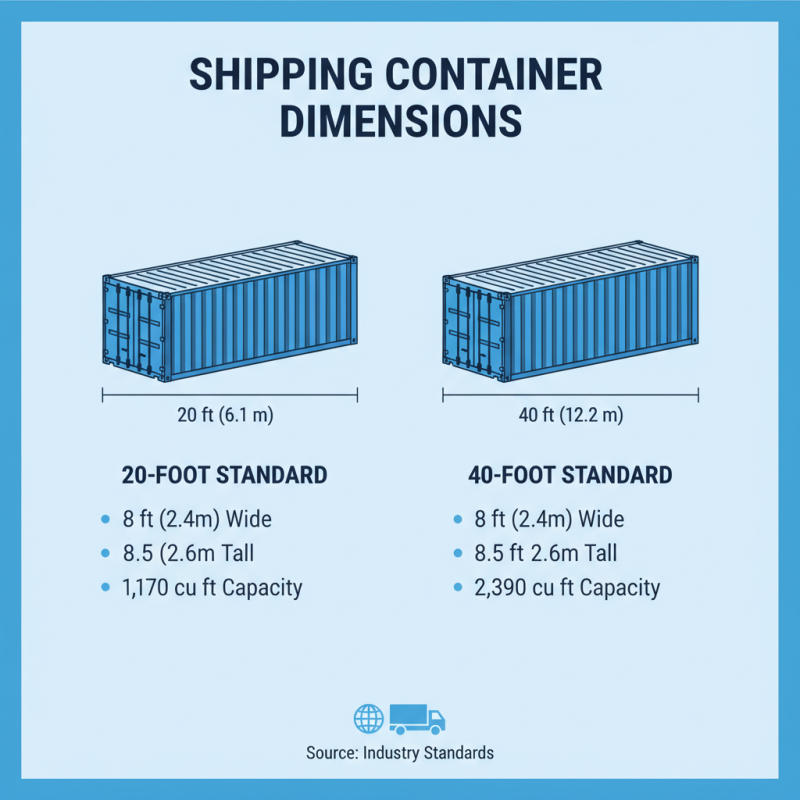
Most commonly, shipping containers are either 20-foot or 40-foot long. Their width typically measures 8 feet. Height can vary, with standard containers usually around 8.5 feet, while high cubes reach 9.5 feet. These specifications can significantly impact logistics and cargo management.
Any miscalculations with shipping container dimensions can lead to costly delays. It's vital to ensure compatibility with vehicles, cranes, and storage facilities. Inconsistent practices across industries highlight the need for precise measurements. Many businesses face challenges due to this oversight. Proper understanding of these dimensions fosters smoother operations.
Standard Sizes of Shipping Containers: An Overview
When it comes to shipping containers, understanding standard dimensions is crucial for logistics and storage. The most common sizes are 20-foot and 40-foot containers. A standard 20-foot container typically measures 20 feet long, 8 feet wide, and 8.5 feet tall. This size is ideal for smaller shipments or limited space. On the other hand, the 40-foot container offers more capacity, measuring 40 feet in length, while maintaining the same width and height as its smaller counterpart.
Tips: If you're unsure which size to choose, consider your cargo volume and weight. A 40-foot container can hold about twice as much as a 20-foot one. However, ensure that you precisely calculate your load. Overloading can lead to damages, delays, and possible fines.
Another key aspect is knowing about high cube containers. These containers are 9.5 feet high, providing extra vertical space. This can be beneficial for taller items. Always inspect the condition of a container before use. Issues like rust or structural damage can compromise cargo safety. Engage with professionals who understand the logistics of shipping when in doubt.
What are the Standard Shipping Container Dimensions?
| Container Type |
External Length (ft) |
External Width (ft) |
External Height (ft) |
Internal Length (ft) |
Internal Width (ft) |
Internal Height (ft) |
Tare Weight (lbs) |
Max Payload (lbs) |
| 20' Standard |
20 |
8 |
8.5 |
19.4 |
7.7 |
7.9 |
4,850 |
48,000 |
| 40' Standard |
40 |
8 |
8.5 |
39.4 |
7.7 |
7.9 |
8,200 |
57,000 |
| 40' High Cube |
40 |
8 |
9.5 |
39.4 |
7.7 |
8.5 |
8,300 |
57,000 |
| 45' High Cube |
45 |
8 |
9.5 |
44.4 |
7.7 |
8.5 |
8,800 |
58,000 |
Common Types of Shipping Containers and Their Dimensions
When considering shipping containers, it's essential to understand the common types and their dimensions. The most frequently used standard containers are the 20-foot and 40-foot models. A 20-foot container typically measures 20 feet long, 8 feet wide, and 8.5 feet tall. It offers about 1,170 cubic feet of space. Conversely, the 40-foot container provides double the length, measuring 40 feet long with the same width and height. Its maximum capacity reaches approximately 2,390 cubic feet.
High cube containers are another option. They are slightly taller than standard containers, measuring 9.5 feet in height. This extra height allows for more vertical storage but may require careful consideration at terminals with height restrictions. Refrigerated containers, or reefers, maintain temperature-sensitive cargo. They come in standard sizes too, like the 20-foot and 40-foot models, but with added cooling technology.
In recent years, container dimensions and standards have been largely regulated by the International Organization for Standardization (ISO). This ensures consistency across shipping methods. However, occasional deviations occur. Not all shipping lines follow the same dimensions strictly. This variability can influence shipping plans and costs, necessitating careful planning to avoid any unexpected issues.
Understanding Container Volume and Weight Limitations
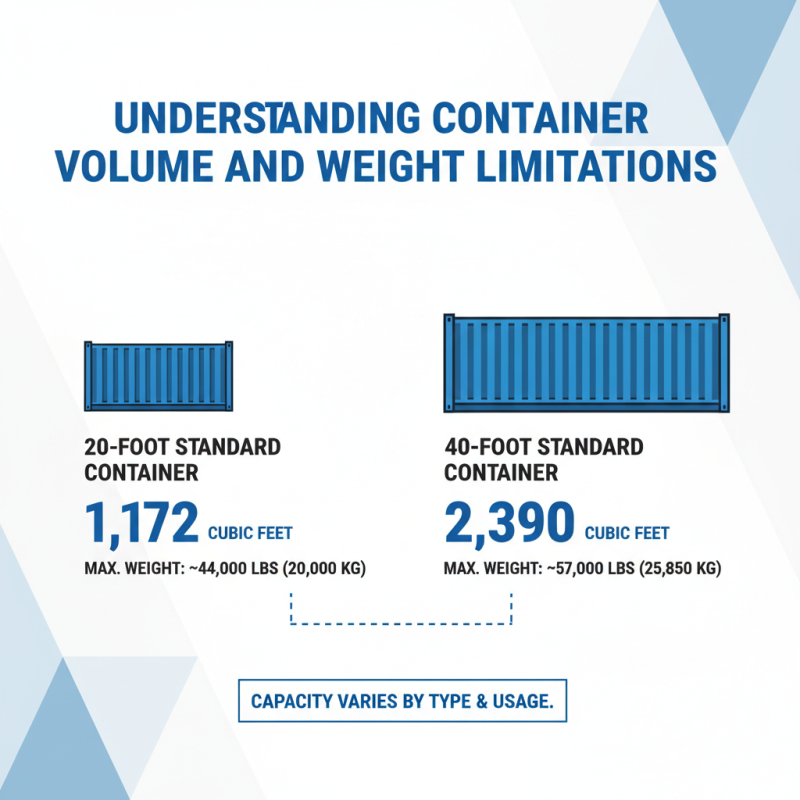
When it comes to standard shipping containers, understanding volume and weight limitations is crucial. Most containers have standard dimensions, such as 20 feet or 40 feet in length. However, their capacity varies based on type and usage. A standard 20-foot container holds about 1,172 cubic feet, while a 40-foot container has approximately 2,390 cubic feet.
Weight restrictions are often overlooked. A typical 20-foot container can carry up to 24,000 kilograms. Meanwhile, a 40-foot container's limit usually reaches around 30,000 kilograms. Knowing these specifications ensures better planning for shipping loads.
Tip: Always measure your cargo before packing. Ensuring it fits within the container's dimensions avoids unexpected issues during transportation.
Packing efficiently is essential too. Utilize the container's space wisely, and consider weight distribution. An unbalanced load can lead to accidents.
Tip: Double-check the container's weight capabilities. Overloading can cause serious penalties and safety risks.
Ultimately, understanding container volume and weight limitations can facilitate smoother logistics. Always be mindful of measurements and regulations for optimal shipping experiences.
Factors Influencing Shipping Container Dimensions
When discussing the dimensions of shipping containers, it's crucial to consider various influencing factors. The primary purpose of a shipping container is to transport goods efficiently. However, different types of cargo require different container sizes and specifications. For example, perishables may need temperature-controlled units, which can affect the overall design.
The shipping industry is also subject to international standards, which dictate standard container dimensions. These standards, however, can vary based on geographic regions and types of transport. Dimensions can be influenced by vessel size and port facilities. As shipping practices evolve, so too do the demands for container suitability. This means dimensions might need to adapt, creating challenges for manufacturers.
Environmental factors add another layer of complexity. Changing regulations regarding sustainability may impact container design. Additionally, the growing trend of e-commerce leads to a rise in last-mile delivery needs. Smaller containers could become more popular for urban deliveries, pushing traditional dimensions to evolve. Each of these factors underscores the dynamic nature of shipping container dimensions in today's world.
Applications of Different Shipping Container Sizes in Logistics
Shipping containers come in various sizes, each tailored for specific logistics needs. The most popular dimensions are the 20-foot and 40-foot containers. According to a report by the International Maritime Organization (IMO), over 90% of global trade relies on shipping containers. This staggering figure highlights the importance of choosing the right container size for logistics efficiency.
The 20-foot container, also known as TEU (Twenty-foot Equivalent Unit), is ideal for smaller loads. It measures 20 feet long, 8 feet wide, and 8.5 feet high. This size is often used for heavy cargo like machinery and construction materials. In contrast, the 40-foot container, or FEU (Forty-foot Equivalent Unit), can hold larger volumes. Its dimensions allow for better space utilization in bulk shipping. Reports show that the 40-foot container can reduce transportation costs by up to 15% due to the higher load capacity.
In logistics, the choice of container can also affect shipping schedules. Larger containers may require advanced planning and more significant port handling resources. Smaller containers, while easier to manage, may lead to multiple trips, impacting delivery timelines. The balance between cost, volume, and time is crucial for effective logistics management. Understanding these dimensions and their applications ensures smarter shipping decisions in the complex world of global trade.
Standard Shipping Container Dimensions and Applications
This chart illustrates the volume capacities of various standard shipping container sizes, highlighting their applications in logistics and shipping industries.