Essential Tips for Maintaining Your Cooling Tower Efficiently?
cooling towers play a crucial role in various industries, helping to manage thermal energy efficiently. According to the U.S. Department of Energy, poorly maintained cooling towers can waste up to 50% of their operational efficiency. Regular maintenance is key to ensuring these systems provide optimal performance.
Expert engineer Dr. Sarah Lawson emphasizes, "Efficient cooling tower management can significantly reduce costs and energy consumption." Her insights highlight the importance of proactive maintenance strategies. Yet, many facilities overlook simple tasks like regular cleaning and inspections, leading to issues like scaling and reduced airflow.
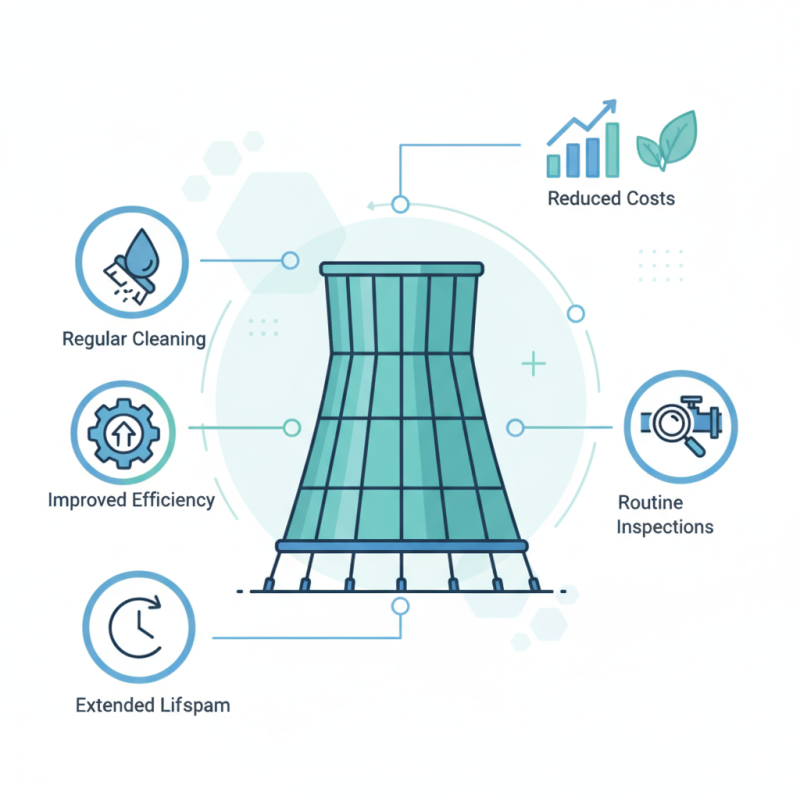
Neglecting these essential maintenance practices can result in unexpected downtime and increased operating costs. Data from the Cooling Technology Institute indicates that effective maintenance can extend the life of cooling towers by up to 30%. Prioritizing maintenance not only ensures efficiency but also aligns with sustainability goals that many companies are now pursuing.
Essential Tips for Maintaining Your Cooling Tower Efficiently
Maintaining your cooling tower efficiently is crucial. Regular inspections can reveal potential issues before they escalate. A study by the American Society of Heating, Refrigerating and Air-Conditioning Engineers (ASHRAE) highlights that poorly maintained cooling towers can operate at only 70% efficiency. This not only wastes energy but also increases costs.
Water treatment is critical. Without proper chemical dosing, scaling and corrosion may occur. According to a report by the U.S. Department of Energy, improper water treatment can lead to up to 15% energy loss. Make sure to check pH levels and biocide concentrations regularly. Ensure that water quality is monitored to avoid such issues.
Cleaning is essential, yet often overlooked. Cooling towers accumulate dirt, debris, and biological growth. This can impair heat exchange efficiency. An article in the Journal of Environmental Engineering states that routine cleaning can enhance performance by as much as 20%. Operators may delay cleaning, thinking it’s not urgent. However, delays can lead to bigger problems down the road. A neglected cooling tower might require more energy, ultimately harming your operational budget.
Understanding Cooling Tower Operation: Key Components and Functionality
Cooling towers play a crucial role in industrial and HVAC systems. They dissipate heat from water within a closed loop. Understanding their key components can enhance efficiency. The primary components include the cooling tower basin, fill media, drift eliminators, and fans. Each part contributes to heat exchange and airflow.
Water circulates through the system, absorbing heat from machinery. It then enters the cooling tower, where it spreads over the fill media. As air flows over this surface, heat dissipates. Fans assist in creating airflow, which is essential for cooling. Drift eliminators capture water droplets, ensuring minimal water loss and enhancing system efficiency.
Regular maintenance is vital. Operators should check for clogs or buildup in the fill media. Inspecting fan blades for wear is necessary. Neglecting these tasks leads to inefficiency. Over time, components may degrade, impacting performance. Understanding the operational dynamics helps address these challenges proactively. Monitoring and adjusting airflow can also optimize cooling capacity.
Regular Maintenance: Cleaning Protocols and Frequency Recommendations
Regular maintenance of cooling towers is crucial for optimal performance. According to the Cooling Technology Institute, approximately 30% of cooling tower systems experience efficiency losses due to inadequate upkeep. Implementing a consistent cleaning protocol can significantly enhance performance. Cleaning should occur at least every three months. This frequency helps prevent the buildup of contaminants, such as algae and scale, which can impair heat exchange efficiency.
In addition to regular cleanings, it's essential to identify and address issues promptly. Visual inspections can reveal signs of corrosion or mineral deposits. A report by ASHRAE highlights that early detection of these issues can reduce overall maintenance costs by up to 25%. Neglecting small problems may lead to major breakdowns, increasing operational downtime. The importance of a detailed maintenance log cannot be overstated. It provides insights into recurring issues and enhances decision-making for future maintenance schedules. Regular documentation allows better planning and resource allocation, ensuring that no detail is overlooked.
Monitoring Water Quality: Importance of Chemical Balance in Cooling Towers
Monitoring water quality in cooling towers is crucial for efficient operations. Maintaining the right chemical balance prevents scale formation and corrosion. These issues can lead to costly repairs and downtime. Regular testing is vital; it ensures that pH levels, conductivity, and total dissolved solids are within the recommended range. Using robust testing kits helps identify potential problems early.
Contaminants can sneak in unnoticed. Biofilm can develop, reducing efficiency. Adding biocides regularly is key to controlling microbial growth. However, overdosing can harm the environment. It’s critical to find a safe balance. Water softeners can help manage hardness but require careful monitoring. Each unit's needs may vary based on usage and local water sources.
Regular maintenance checks are more than routine; they can uncover underlying issues. Look for leaks or unusual noises in the system. Visual inspections can reveal buildup or discoloration. Adjusting chemical feeds based on real-time data enhances performance. Keeping a log of all readings and treatments is essential for tracking changes over time. It helps improve long-term management and efficiency.
Efficiency Metrics: Evaluating Performance and Energy Usage in Cooling Systems
Evaluating the performance of cooling systems is crucial for efficiency. The American Society of Heating, Refrigerating and Air-Conditioning Engineers (ASHRAE) indicates that inefficient cooling towers can cause energy usage to spike by up to 30%. Regular monitoring can help catch issues early. Using metrics like the heat transfer efficiency and water usage can pinpoint areas for improvement.
Cooling systems often operate best within specific temperature ranges. Deviations can decrease efficiency. A study showed that maintaining the inlet water temperature between 50°F and 85°F maximizes performance. Even minor fluctuations can lead to an increase in energy consumption.
Continuous assessment is necessary. Cooling towers should have an annual preventive maintenance plan. According to data from the U.S. Department of Energy, proper maintenance can reduce energy use by up to 20%. Ignoring this could lead to unexpected failures and costly repairs. We should remain vigilant about our energy usage and efficiency metrics.