
Meat Processing Equipment affects product consistency, plant hygiene, worker safety, and production flow. A grinder that feeds unevenly or a slicer that drifts can disrupt an entire shift. So can a conveyor that is difficult to clean. The details matter.
This guide introduces ten suppliers serving meat processors worldwide, from companies offering cutting and grinding systems to those supplying mixing, forming, thermal processing, and packaging lines. Supplier names alone tell little. Buyers also need to examine throughput, changeover time, cleaning access, spare-parts support, and how well equipment fits an existing floor plan. Real plants vary. A polished specification sheet cannot reveal every operational constraint.
Dr. Temple Grandin, an animal scientist known for her work on livestock handling, has stated: “The animal’s point of balance is at the shoulder.” That principle matters when evaluating handling equipment and the layout of a processing line. A system’s design can influence how animals move before processing, not just how quickly a machine runs. This overview focuses on practical comparison, rather than treating a high capacity figure as proof of a better fit. Supplier claims should be checked against site requirements and, where possible, operating references. That comparison has limits: public information may not capture service quality in every region. Use the list as a starting point, then ask specific questions about installation, sanitation, maintenance, and performance under real production conditions.
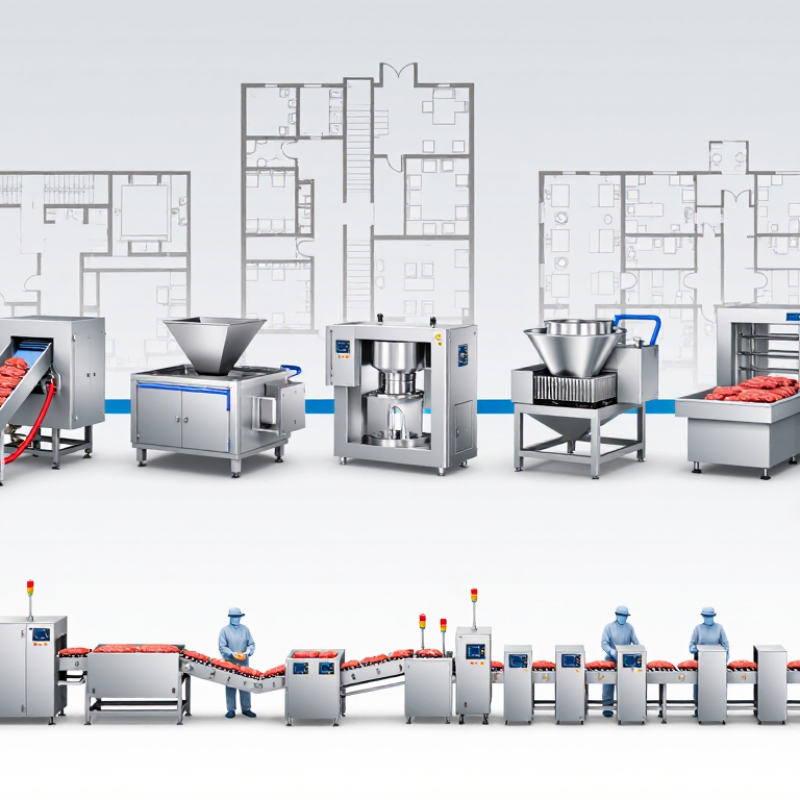
Meat processing equipment covers the machines and tools used to turn raw meat into consistent, packaged products. The category starts with receiving and inspection equipment, such as scales, carts, and temperature probes. It can also include saws, slicers, grinders, and mixers. A grinder’s plate size, for example, affects texture, while a mixer helps distribute seasonings evenly. It varies.
Further along the line, processors may use forming machines for patties, stuffers for sausages, or tumblers to move marinades through cuts of meat. Cooking, smoking, chilling, and packaging equipment may also be part of the setup. Not every facility needs every machine. Product type, daily volume, available floor space, and the desired level of automation all shape the equipment list.
The supporting details matter just as much. Smooth food-contact surfaces, accessible joints, and removable parts can make cleaning easier, while guards and emergency stops support safer operation. Temperature sensors and calibrated scales help teams check process conditions and portion weights. A machine’s stated capacity can be misleading if it assumes ideal feeding or nonstop operation. Actual output may fall when changeovers, cleaning, or uneven raw materials slow the line. Equipment selection deserves a close look at those ordinary interruptions.

An overview of common equipment across key meat-processing stages.
Counts represent the equipment examples listed for each stage in this overview, not market size or supplier rankings. Examples include stunning, bleeding and carcass-splitting equipment; cutting and deboning tools; grinders, mixers and stuffers; smokehouses, cookers and ovens; and packaging, chilling and freezing equipment.
A global comparison should begin with the production task, not a supplier’s headline capacity. A line handling chilled cuts has different needs from one processing frozen blocks. Buyers can compare throughput, product range, changeover time, and cleaning access against the same operating conditions. Numbers can mislead. A quoted hourly rate may assume steady feeding, skilled operators, and no interruptions.
Technical documents matter, but they are only one part of the review. Check material specifications, guarding, washdown design, and how routine maintenance is performed. Ask for operating manuals and a clear list of wear parts. If possible, speak with users running similar products and shifts. Their notes on jams, cleaning time, or delayed components can reveal details a brochure omits. A factory visit or live demonstration adds useful evidence, though one successful test cannot guarantee daily performance.
Compare service coverage across the regions where the equipment will operate. Response times, technician availability, training, and spare-part access affect downtime and should be recorded alongside purchase price. Use consistent questions and document the evidence behind each rating. Still, scorecards have limits. I might give service a higher weight than another buyer, and that judgment should be visible. Supplier comparisons are strongest when assumptions are stated, gaps are acknowledged, and claims are checked rather than accepted at face value.
The ten supplier profiles represent different strengths across the processing line: primary slaughter, carcass handling, portion cutting, deboning, mincing, mixing, forming, cooking, chilling, and packaging. This breadth matters as global meat production grows. The OECD-FAO Agricultural Outlook 2024–2033 projects production to rise by 12% over the outlook period. That growth places practical demands on equipment: steady throughput, cleanable contact surfaces, and reliable changeovers between product runs. Small details count. A hard-to-reach seam can slow sanitation; a poorly matched conveyor can interrupt an otherwise capable line.
When comparing suppliers, look beyond headline capacity. Ask how machines handle variable carcass sizes, how quickly wear parts can be replaced, and whether controls can share usable production data. Profiles focused on cutting or deboning may suit plants prioritizing yield, while forming and cooking specialists serve different product needs. Chilling and packaging suppliers affect temperature control and shelf-life workflows. These distinctions are useful, but not perfect: published specifications rarely reveal performance under a plant’s actual staffing, layout, or product mix. Requesting a line trial and checking service response times can expose gaps before installation. A high-speed machine is not automatically the right one.
| Profile | Headquarters country | Main equipment focus | Processing stages served | Typical applications |
|---|---|---|---|---|
| Supplier 1 | Iceland | Integrated meat-processing lines, cutting and deboning systems, grading, packaging, and production software | Primary processing through portioning and packing | Beef, pork, and poultry operations |
| Supplier 2 | Germany | Industrial grinders, mixers, cutters, forming equipment, and thermal-processing systems | Preparation, forming, cooking, and processing-line integration | Large-scale meat and sausage production |
| Supplier 3 | Germany | Vacuum filling, portioning, linking, and co-extrusion equipment | Filling and product forming | Sausages, formed products, and portion-controlled meat products |
| Supplier 4 | Germany | Vacuum fillers, portioning systems, linking machines, and forming equipment | Filling, dividing, and shaping | Sausage production and other portioned meat products |
| Supplier 5 | Germany | Thermoforming packaging machines, tray sealers, vacuum packaging, and labeling equipment | Packaging and product labeling | Fresh meat, processed meat, and poultry packs |
| Supplier 6 | United States | Grinding, mixing, separation, forming, and slicing systems | Raw-material preparation through product forming and slicing | Meat processors producing ground, formed, and sliced products |
| Supplier 7 | Germany | Slaughter, deboning, and separation equipment for animal-protein processing | Primary processing, cutting, and recovery of meat from bone | Meat and poultry processing facilities |
| Supplier 8 | Netherlands | Poultry slaughter, evisceration, chilling, and automated processing systems | Poultry primary processing and line automation | Broiler and other poultry-processing plants |
| Supplier 9 | United States | Meat-trimming and portion-cutting tools and related processing equipment | Trimming, deboning, and preparation | Meatpacking plants and food-processing operations |
| Supplier 10 | Denmark | Slaughterhouse automation, deboning systems, robotic solutions, and hygiene equipment | Primary processing, deboning, and plant hygiene | Industrial meat-processing facilities |
Note: Supplier names and brands are intentionally omitted; profiles summarize established equipment specializations by headquarters country.
Across the leading meat-processing equipment suppliers, core offerings usually span slaughter-line systems, carcass handling, cutting and deboning, portioning, weighing, packaging, and cleaning equipment. Their markets differ: high-volume plants often prioritize automated conveyors and consistent throughput, while smaller processors may value modular machines that fit existing floor plans. Cold, wet production rooms make stainless-steel construction and accessible washdown points practical necessities, not decorative features. Fit matters.
Market demand helps explain this product mix. The OECD-FAO Agricultural Outlook 2023–2032 projects global meat consumption to rise by 14% by 2032, compared with the 2020–2022 average; poultry is expected to account for 41% of additional consumption. That growth supports investment in poultry cut-up and packaging lines, alongside flexible systems for pork and beef processors. Yet a supplier’s stated capacity is not a guarantee of real plant output. Changeovers, maintenance access, worker training, and local service coverage can alter results. Comparisons can be imperfect, too: quoted line speeds may rely on different product sizes and operating conditions. Buyers should check those assumptions and compare documented performance, hygiene design, and lifecycle support before selecting equipment.
Across global meat processing, equipment markets are moving toward connected lines that track product temperature, line speed, and downtime. Sensors can help operators spot a worn bearing before it stops a conveyor. But data only helps when staff can interpret it and records stay consistent. Hygienic design remains essential: smooth welds, accessible guards, and tool-free removal can make cleaning checks more practical. More automation is not always better. Small plants may need modular machines and local service more than fully integrated systems.
Energy and water efficiency are becoming central purchasing criteria, especially where utilities are costly or supply is limited. Newer systems may reduce idle running, optimize chilling, or reuse process water where suitable treatment and controls exist. Results depend on product mix, maintenance, and operating habits. This matters. Suppliers are also adapting equipment for flexible batches, changing cut sizes, and tighter traceability requirements. Yet upgrades can bring training gaps and data silos. I would not treat dashboards as proof of better yield; measured trials on the actual line are more convincing.
Tips: Ask for a site-specific trial, cleaning-time data, spare-parts lead times, and operator training. Check performance during a full production shift, not only a sales demo.
Fax: (920) 793-3818
